
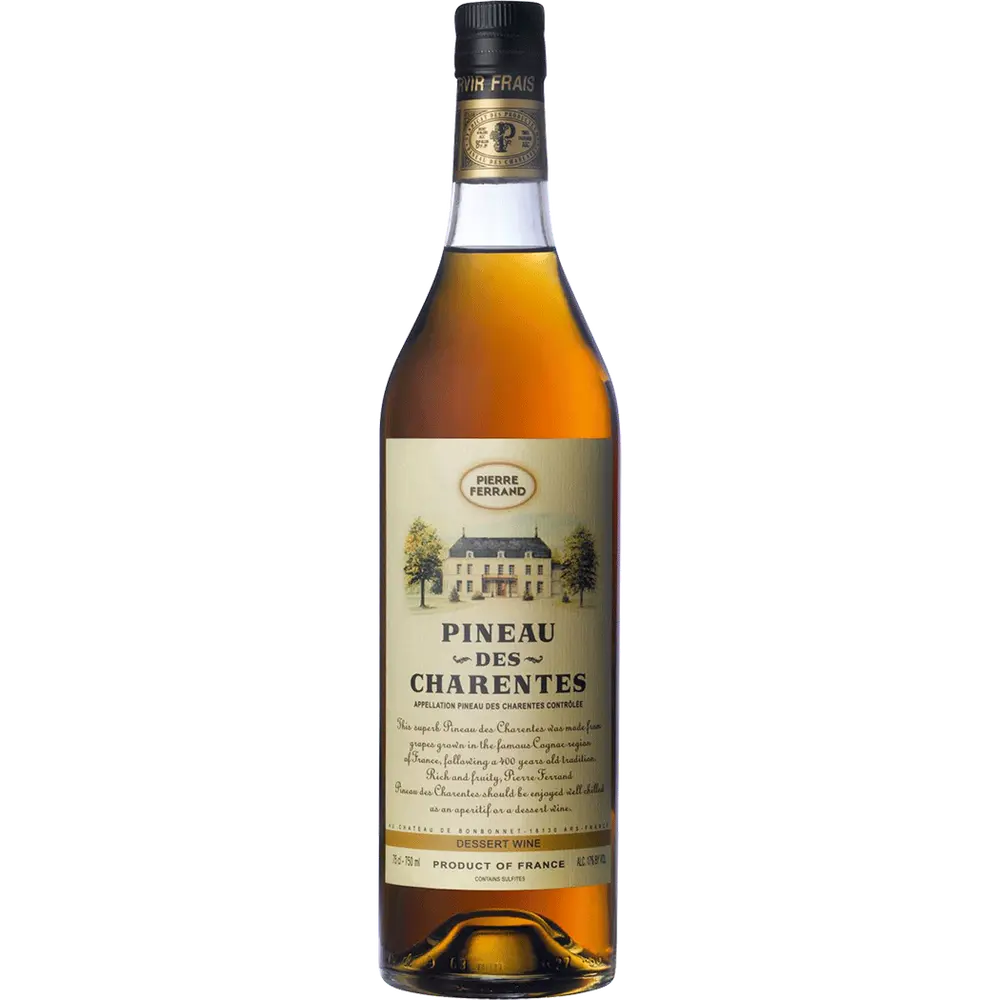

Pierre Ferrand Pineau Des Charentes Blanc
✔ $14.99 Nationwide Flat Rate Shipping
✔ Free Shipping on Orders $150+
✔ 3-4 Business Day Shipping
✔ Trusted by Cocktail Enthusiasts Nationwide
Bottle design may vary from image shown.
🔒 Guaranteed Safe & Secure Checkout
Description
Pierre Ferrand Pineau des Charentes Blanc (750ML)
Pierre Ferrand Pineau des Charentes Blanc is a captivating, masterfully executed French fortified wine-aperitif that stands as a definitive benchmark for its category. Produced by the innovative Maison Ferrand (led by Master Blender Alexandre Gabriel) in the heart of the prestigious 1er Cru Grande Champagne region of Cognac, this expression represents a pristine liquid tradition dating back centuries.
Pineau des Charentes is crafted through a highly specific process called mutage. On the very same day the estate's high-acid white wine grapes (primarily Ugni Blanc and Colombard) are freshly pressed into unfermented grape juice ("must"), the liquid is immediately blended with very young, vibrant Cognac eau-de-vie. The high proof of the raw Cognac instantly halts any yeast activity and arrests fermentation. This locks in the 100% natural, unfermented sugars of the grape juice while fortifying the liquid to a structured 17% ABV (34 Proof). The resulting blend is then aged inside French oak casks for a minimum of 18 months (with at least 12 months spent in wood), allowing the fresh orchard fruits and elegant Cognac warmth to marry into a singular, velvety elixir.
Technical Product Specs
-
Size: 750ML Elegant Clear Glass Format
-
ABV/Proof: 17% ABV (34 Proof)
-
Spirit/Wine Classification: AOC Pineau des Charentes (France's first fortified wine Appellation, established in 1945)
-
The Liquid Blueprint: Freshly pressed Ugni Blanc and Colombard grape must, blended with estate-grown young Grande Champagne Cognac.
-
Aging Regimen: Aged for a minimum of 18 months, including a mandatory 12 months in classic French oak casks.
-
Purity Status: 100% naturally sweet from the raw grape sugars; no artificial coloring or sugar syrups added.
-
Critical Pedigree: Highly decorated, capturing a 92-Point rating from Wine Enthusiast, which hailed it as a "benchmark example of the style."
Tasting Notes: Flavor and Aroma Profile
Thanks to the barrel maturation, the liquid pours a gorgeous, shimmering golden amber hue with a slightly oily, rich viscosity that clings elegantly to the glass.
-
Aroma (Nose): Radiant, deeply aromatic, and incredibly fresh. The bouquet opens with an upfront wave of clear wildflower honey, ripe peaches, and fresh apricot jam, beautifully complemented by secondary top notes of toasted almonds, orange blossoms, and a soft whisper of vanilla bean.
-
Palate (Taste): Lush, full-bodied, and beautifully balanced. The entry treats the tongue to an opulent, honeyed arrival of stewed yellow pears, golden raisins, and fig compote. Across the mid-palate, it unrolls complex gourmand notes of quince paste (pâte de coing) and caramel. Crucially, a vibrant backbone of natural grape acidity cuts cleanly through the sweetness, preventing the mouthfeel from ever feeling heavy or cloying.
-
Finish: Long, refreshing, and satisfyingly warm. The honeyed fruit notes recede gracefully, closing with a trailing signature of toasted nuts, subtle oak spices, and a gentle, glowing halo of Cognac warmth.
Service and Presentation Rituals
-
The Perfect Aperitif Chill: Pineau des Charentes is meant to be served cold. Heavily chill the bottle down to 45°F to 50°F (7°C to 10°C) before serving.
-
The Glassware: Pour 2 to 3 oz into a traditional tulip-shaped white wine glass or a small sherry copita. Alternatively, it can be served over a single large block of clear artisanal ice in a rocks glass for a highly refreshing pre-dinner sipper.
-
The Sommelier Mixology Shortcut: Behind the bar, this liquid functions as an elite, luxurious alternative to sweet white vermouth. Swap it into your favorite stirred brown-spirit recipes—such as substituting it for sweet vermouth in a White Manhattan or pairing it with aged rums and rye whiskies.
Elite Food Pairings
The unique juxtaposition of unfermented grape sugars, high natural acidity, and a robust Cognac spine allows this Pineau to behave as a monumental weapon at the dinner table.
-
Salty & Pungent Blue Cheeses: An absolute, text-book pairing masterclass alongside Roquefort, Gorgonzola, or Stilton. The intense salt and creamy fat of the cheese collide spectacularly with the wine's honeycomb sweetness.
-
Rich Foie Gras & Pâtés: Pair a chilled glass next to seared foie gras or a rich duck liver mousse served on brioche. The clean grape acidity effortlessly slices through the heavy, decadent liver fats.
-
Fresh Summer Melons: The definitive, historic French country pairing. Pour a splash of chilled Pineau des Charentes directly into the center of a halved, deseeded Charentais or Cantaloupe melon, allowing the flesh to absorb the honey and apricot flavors.
Frequently Asked Questions (FAQs)
Is this the same thing as Vermouth?
No, they belong to different categories. While both are used similarly as chilled French aperitifs and cocktail modifiers, they are built differently:
-
Vermouth: Is a flavored, aromatized wine that has been fully fermented, fortified, and then steeped with various bitter roots, barks, and botanicals (like wormwood).
-
Pineau des Charentes: Is a mistelle (a liqueur wine) built on completely unfermented grape juice stopped in its tracks by raw Cognac. It relies entirely on the pure, unadulterated fruit sweetness of the grape harvest and the oak barrels for its flavor profile, with zero herbs or added flavorings.
Does it need to be refrigerated after opening?
Yes. Because it is built on fresh grape sugars and rolls out at a moderate 17% ABV framework, it must be stored inside your refrigerator once the cork is pulled. While the Cognac content protects it from spoiling or turning into vinegar immediately, keeping it chilled slows down oxidation, preserving its vibrant peach and apricot aromatics for roughly 4 to 6 weeks.
What is the main difference between White and Red Pineau des Charentes?
It comes down to grape varieties and flavor architecture:
-
Pineau Blanc: Uses white grapes like Ugni Blanc and Colombard. It focuses heavily on bright stone fruits (peaches, apricots), wildflower honey, citrus zest, and a crisp, nutty finish.
-
Pineau Rouge: Uses red grapes like Cabernet Sauvignon and Merlot. It yields a deep ruby or raspberry hue and unrolls a totally different flavor wheel dominated by jammy cherries, blackberries, plums, and subtle hints of cocoa.