
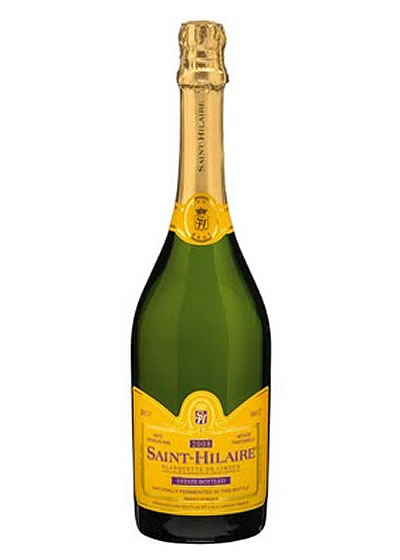

Saint Hilaire Blanc de Blancs Brut Blanquette de Limoux
✔ $14.99 Nationwide Flat Rate Shipping
✔ Free Shipping on Orders $150+
✔ 3-4 Business Day Shipping
✔ Trusted by Cocktail Enthusiasts Nationwide
Bottle design may vary from image shown.
🔒 Guaranteed Safe & Secure Checkout
Description
Saint Hilaire Blanc de Blancs Brut Blanquette de Limoux (750ML)
Saint Hilaire Blanc de Blancs Brut Blanquette de Limoux is a masterfully crafted, historically profound sparkling wine that stands as one of the ultimate values in French viticulture. Produced by the renowned Sieur d'Arques winery in the Languedoc-Roussillon region of southern France, this wine carries an extraordinary legacy.
While Champagne often dominates the luxury conversation, the Benedictine Monks of the Abbey of Saint-Hilaire actually invented the world's very first sparkling wine in 1531—more than a century before Dom Pérignon or the Champagne region began mastering the bubble. Today, famed wine critic Robert Parker famously praises Saint Hilaire as being "similar to top-quality nonvintage Champagne at one-third the price."
What defines the unique character of Blanquette de Limoux is its strict reliance on the indigenous Mauzac grape varietal (locally called Blanquette, meaning "small white"). By law, the blend must be anchored by a minimum of 90% Mauzac, with the remaining balance rounded out using Chardonnay and Chenin Blanc.
The wine is crafted strictly using the Méthode Traditionnelle (the exact same secondary bottle-fermentation process used in Champagne) and rests extensively on its dead yeast cells (lees). This creates a highly refined, naturally sparkling structure bottled at a balanced 12% ABV.
Technical Wine Specs
-
Size: 750ML Standard Premium Champagne Format (Heavy-green glass with a traditional wire cage and cork enclosure)
-
ABV: 12.0%
-
Wine Classification: AOC Blanquette de Limoux, Languedoc-Roussillon, France
-
The Varietal Blueprint: ~90% Mauzac, 5% Chardonnay, 5% Chenin Blanc.
-
The Method: 100% Méthode Traditionnelle (Secondary bottle fermentation with extended lees contact).
-
Critical Pedigree: An absolute critical darling in the value-luxury tier, routinely capturing a magnificent 93-Point Score from Wine Enthusiast, a stellar 92-Point Score from Wine-Searcher critics, and top Gold Medals at the Sunset International Wine Competition.
Tasting Notes: Flavor and Aroma Profile
The traditional method fermentation and high concentration of heritage Mauzac grapes grant the liquid a brilliant pale-gold and soft straw hue in the glass with an aggressive, ultra-fine, and persistent mousse of delicate bubbles.
-
Aroma (Nose): Intensely radiant, complex, and distinctively fragrant. The bouquet opens with a dominant wave of green apple skins, fresh-cut pear, and lemon rind, beautifully lifted by delicate secondary top notes of white roses, white flowers, and a subtle yeastiness reminiscent of toasted corn and fresh dough.
-
Palate (Taste): Light-to-medium-bodied, vibrant, and texturally creamy. The entry treats the tongue to a crisp arrival of white grapefruit and tart citrus acids. Across the mid-palate, its extended bottle maturation asserts itself—unrolling elegant layers of candied lemon zest, crisp apple peel, fresh ginger, and smooth custard cream.
-
Finish: Medium-long, harmonious, and remarkably dry. The volatile orchard fruit notes recede gracefully, closing with a trailing signature of flinty minerality, lingering almond skins, and a clean, toasty bread warmth that leaves the palate feeling completely refreshed.
Connoisseur Service Rituals
-
The Perfect Chilling Window: To appreciate its complex yeast and stone-fruit layers at their peak, serve Saint Hilaire at a cool target temperature of 44°F to 48°F (6°C to 9°C). Avoid serving it ice-cold straight out of a sub-zero freezer, which will temporarily numb the delicate white rose, ginger, and almond aromatics.
-
The Glassware Exception: While a traditional narrow Champagne flute looks beautiful, serving this historic sparkling wine in a tulip-shaped glass or a standard white wine glass is highly recommended. The wider bowl gives the aggressive mousse room to soften while funneling the unique, cider-like Mauzac aromatics directly toward your nose.
Gourmet Culinary Pairings
Saint Hilaire’s elegant combination of racy citrus acidity, creamy mid-palate texture, and a bone-dry, mineral finish allows it to function as a spectacular companion for rich fats, shoreline seafood, and comforting street food snacks.
-
Pristine Shoreline Seafood: An absolute textbook, world-class home run alongside oysters on the half shell, pan-seared sea scallops, or a rich lobster risotto. The wine's brisk acidity echoes the natural brine of seafood while effortlessly slicing through heavy butter sauces.
-
Fried & Savory Comfort Fats: Pair a chilled glass next to a platter of crispy southern fried chicken, tempura shrimp, or a bucket of hot buttered popcorn. The lively carbonation acts as an elite palate cleanser, washing away cooking oils between bites.
-
Tangy Artisanal Cheeses: It behaves beautifully next to an artisanal board highlighting goat cheese crostini drizzled with honey, fresh triple-cream Brie, or classic Greek feta, where the tangy dairy fats melt flawlessly into the wine's toasted bread finish.
Frequently Asked Questions (FAQs)
What is the difference between Blanquette de Limoux and Champagne?
The primary differences come down to geography, grape varietals, and history:
-
Champagne: Is produced in northern France using a blend dominated by Pinot Noir, Pinot Meunier, and Chardonnay, resulting in a heavier, deeply toasty, and bready profile.
-
Blanquette de Limoux (This Bottle): Is produced in the foothills of the Pyrenees Mountains in southern France. It relies heavily on the indigenous Mauzac grape (90%), which introduces a much lighter, crisp-bodied, and orchard-fruit-driven profile centered around green apple skins and fresh pear—offering identical sparkling quality at a fraction of the price.
Is Saint Hilaire Blanc de Blancs sweet or dry?
It is a completely dry sparkling wine. It is officially classified as a "Brut," meaning it features a minimal, well-integrated sugar dosage that fully ferments out. While the intense southern French sunshine grants the grapes optimal ripeness—giving the front of your tongue a lush, juicy perception of ripe peach and melon fruits—the liquid transitions rapidly across the mid-palate into a highly savory, crisp, and bone-dry finish.
Why is this wine labeled as a "Blanc de Blancs"?
"Blanc de Blancs" is a traditional French winemaking term that translates to "white of whites." This indicates that the sparkling wine was crafted exclusively from white-skinned grape varietals (in this case, Mauzac, Chardonnay, and Chenin Blanc). Because zero red-skinned grapes (like Pinot Noir) entered the press houses, the resulting liquid is characterized by its signature pale-straw clarity, lighter body, and bright, refreshing citrus-driven acidity.
Does this sparkling wine require aging, or should I drink it immediately?
Saint Hilaire undergoes extensive aging on its lees and secondary fermentation inside the bottle before it ever leaves the winery in France. This means it is delivered to you fully mature and optimized for immediate enjoyment tonight. It does not require home cellaring to soften up. To preserve its racy carbonation and fresh fruit flavors, it is best consumed within 1 to 3 years of purchase.
How should I store an opened bottle to keep it fresh and bubbly?
Once the cork is popped, oxygen and pressure loss will begin to slowly degrade the wine's carbonation. To preserve its vibrant mousse and crisp fruit profile, seal the opened bottle immediately with a high-quality, pressure-locking Champagne stopper and store it completely upright inside your refrigerator. The cold temperature and sealed pressure will keep the wine tasting fresh, crisp, and bubbly for 2 to 3 days.